
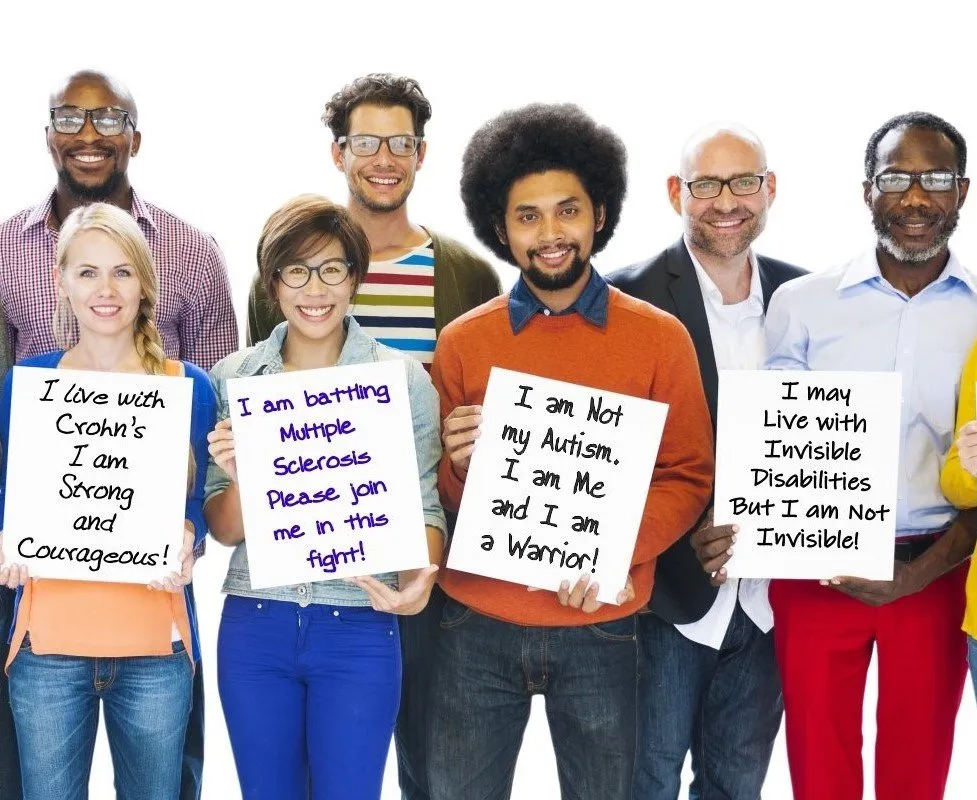
When people think about disability, they often think about conditions that are immediately visible. However, many disabilities are not obvious to others and can easily go unnoticed in the workplace.
These are often referred to as invisible, hidden or non-visible disabilities. Whilst they may not be immediately apparent, they can have a significant impact on an individual’s daily life and working experience.
Non-visible disabilities can include:
- Mental health conditions
- Autism spectrum conditions
- ADHD
- Learning difficulties
- Hearing or visual impairments
- Long-term health conditions such as diabetes, chronic pain and epilepsy
- Respiratory conditions, including severe asthma
- Sleep disorders and chronic fatigue conditions
Many people live and work successfully with these conditions, often without colleagues being aware of the challenges they may face.
Why employers need to be aware
A non-visible disability is not always immediately disclosed by an employee. Some individuals may worry about stigma, misunderstanding or the impact disclosure could have on their career.
This means managers cannot assume that every employee who requires support will automatically come forward and ask for it.
Creating an environment where employees feel comfortable discussing health conditions and seeking support is therefore essential.
Understanding your legal responsibilities
Under the Equality Act 2010, a person may be considered disabled if they have a physical or mental impairment that has a substantial and long-term adverse effect on their ability to carry out normal day-to-day activities.
Many invisible disabilities can fall within this definition.
Disability is a protected characteristic, meaning employers must not discriminate against employees because of their disability and may be required to make reasonable adjustments to remove workplace disadvantages.
Whilst an employer’s knowledge of a disability is relevant in some circumstances, organisations should be mindful that workplace policies and practices can unintentionally place disabled employees at a disadvantage.
Creating a supportive workplace
The most effective way to support employees with invisible disabilities is to create a culture where people feel safe discussing their needs and seeking support when required.
As a starting point, employers should:
- Have clear Equality, Diversity and Inclusion policies
- Encourage open and supportive conversations about wellbeing
- Ensure managers understand disability discrimination and their responsibilities
- Consider using tools such as Wellness Action Plans and stress risk assessments
- Take concerns about health and wellbeing seriously and explore whether support may be needed
- Foster a workplace culture that values inclusion and respect
Many organisations are also familiar with the Sunflower Lanyard scheme, a recognised symbol used by some people to indicate they have a non-visible disability and may require additional support or understanding.
Supporting your employees
Every employee’s situation is different. What works for one person may not work for another. Taking the time to understand individual circumstances and considering reasonable adjustments can make a significant difference to wellbeing, engagement and performance.
For employers, supporting employees with invisible disabilities is not simply about legal compliance. It is about creating an inclusive workplace where people can perform at their best and feel valued for who they are.
Need support?
If you need advice on managing disability-related issues, implementing reasonable adjustments or developing your Equality, Diversity and Inclusion policies, our team can help.
Contact us on 01794 874232 or email hello@emphasis.uk.com to discuss your requirements or head over to our training workshops to train your managers.